Concepts
Niches Have Riches
Does your product have a wide range of applications, and you don't want to turn away business? You probably need to choose. Read how one startup rode focus to a $5B valuation
Otto Pohl
Share this post

I work with founders all the time who bridle at the idea of narrowing their product down to one use case or one industry.
Do any of these ring true as to why you retain vague messaging?
My product has so many applications
Investors will see me as thinking too small
Potentially turn down business? Are you crazy?
Today I want to share the path of a startup that floundered until they found a use case so tight they rode it to a $5B valuation.
When Clay started in 2017, founders Kareem Amin and Nicolae Rusan had the idea of making spreadsheets that could draw data from other sources.
5 years later, they had 20 paying customers, but overall revenue was still a rounding error from zero. The headline on their homepage? “Build Tools & Workflows to Supercharge Your Team.” Not inaccurate—but it could describe dozens of other companies. And when your homepage headline resembles a Rorschach test, it’s not surprising when customers who find their way to your site end up using your product for different things.
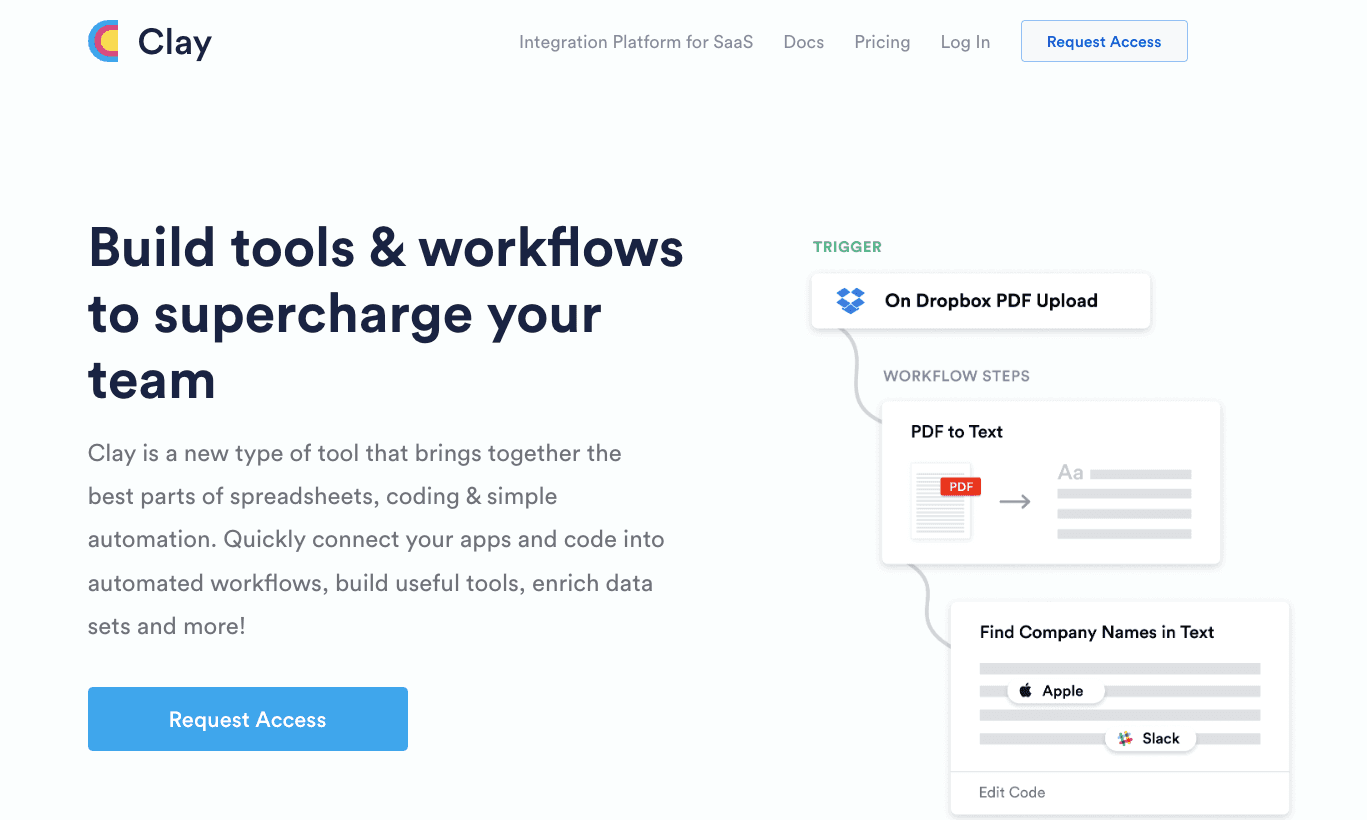
July 1, 2020 (web.archive.org)
Your homepage is a confession: it tells the world exactly how clearly you understand who you are and who you serve.
Many homepages confess confusion, or at least indecision. Clay’s did. They were too worried about pushing away potential business that they didn’t lean into a specific use case.
When you describe your features, you force potential customers to think through how those features might help them. And it’s hard to describe benefits unless you know who your customer is.
Things changed when a third co-founder, Varun Anand, joined the company. He did customer research and discovered that one specific audience, cold email agency owners, were the ones that immediately understood the value of the product. So in January 2022, Clay made what Amin describes as the hardest decision of the company's life: focus exclusively on go-to-market teams. Kill every other use case. Rewrite the website. Stop selling to recruiters even when they begged.
Varun hired a Head of Narrative (as employee #11) and their external messaging shifted in two ways: first, to the new target ICP, and second, from feature-focused to benefit-focused.
The homepage messaging changed to “Automate your prospecting” and later to “Build targeted lead lists within minutes.” Every external asset the company produced was targeted at that ICP. The focus was on, and revenue started scaling.
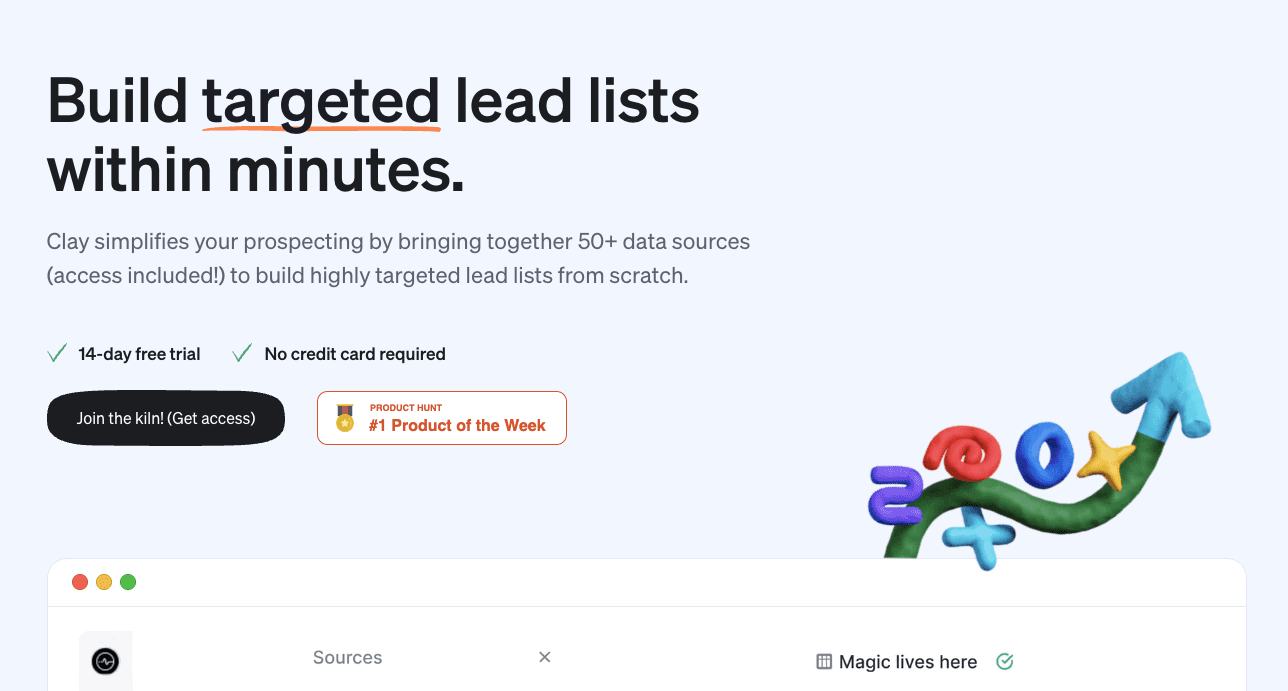
22 November 2022
Whenever a product has multiple applications, resistance to limiting uses cases is often high. I have this conversation with founders several times a week. Narrowing feels claustrophobic. Why are we doing something smaller when we could be doing something bigger? Varun's answer: by narrowing your scope, you actually increase your value.
The horizontal "we can do anything" position is the least valuable thing you can claim, because every potential customer has to do the work of figuring out what you do for them. That's work they probably won’t do.
Aside from the meta aspect of the Clay story—their GTM worked when they focused on the GTM market—what makes the Clay story remarkable was that they didn’t stop with the idea of helping cold email experts. They realized that figuring out how to prospect for customers is the burning hot tip of perhaps the most desirable spear for an early startup: GTM growth. Every successful company must figure out how to find customers with an alchemy of data, creativity, and chutzpah.
But that profession didn’t have a specific job title, so Clay gave it one: GTM Engineer. With that target audience defined, everything the company wrote and talked about was focused on the combination of skills this job title would do. And it worked. You can now find thousands of job openings for GTM Engineers online.
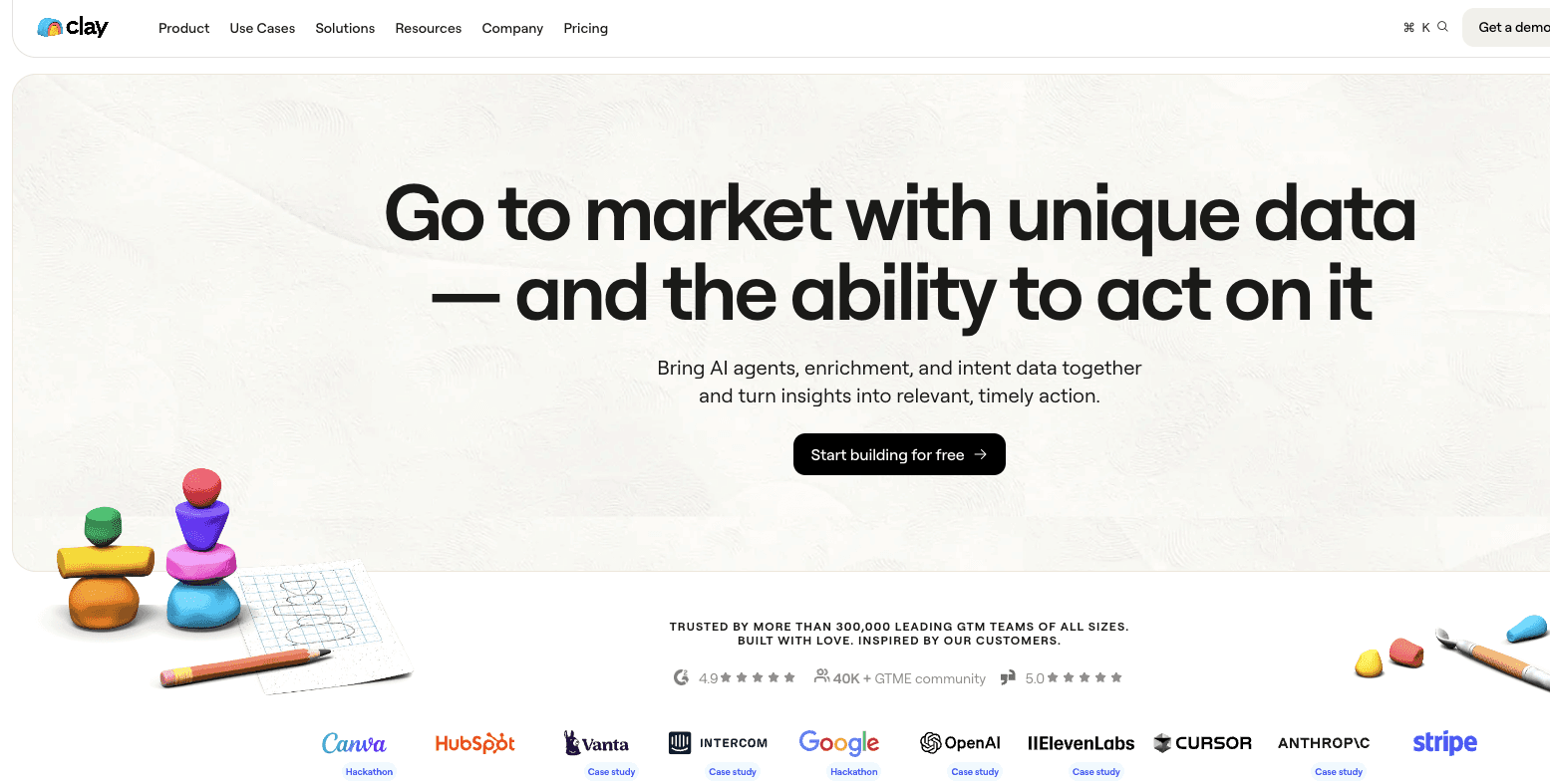
18 May 2026
Inventing a profession for your customers is a clever variation of defining your product as a new category. It won’t work for every startup, but when it does, watch out.
Clay now has $100m ARR. Their valuation rocketed from $1.25B a year ago to $3.1B last August to $5B in January.
Here’s the key lesson: Buried in almost every niche is an idea so powerful you can ride it to the moon. Picking a use case or an audience feels like loss until you do it. Every recruiter or accountant felt like leaving money on the table. Yet the math turned out the other way—the value of their company multiplied roughly 250x in the four years after they picked.
Constraints didn't shrink the business. They created it.
I often tell founders hoping to work with me that every good conversation about narrative is really a conversation about strategy. Once you have the right strategy, the messaging will follow—and messaging is often a great way to surface that strategic conversation.
Read your homepage now. Does it telegraph audience indecision?
Share this post
Otto Pohl is a communications consultant who helps startups tell their story better. He works with deep tech, health tech, and climate tech leaders looking to create profound impact with customers, partners, and investors. He has taught entrepreneurial storytelling at USC Annenberg and at accelerators across the country.